Is numerology biblical? The honest reading of the verses
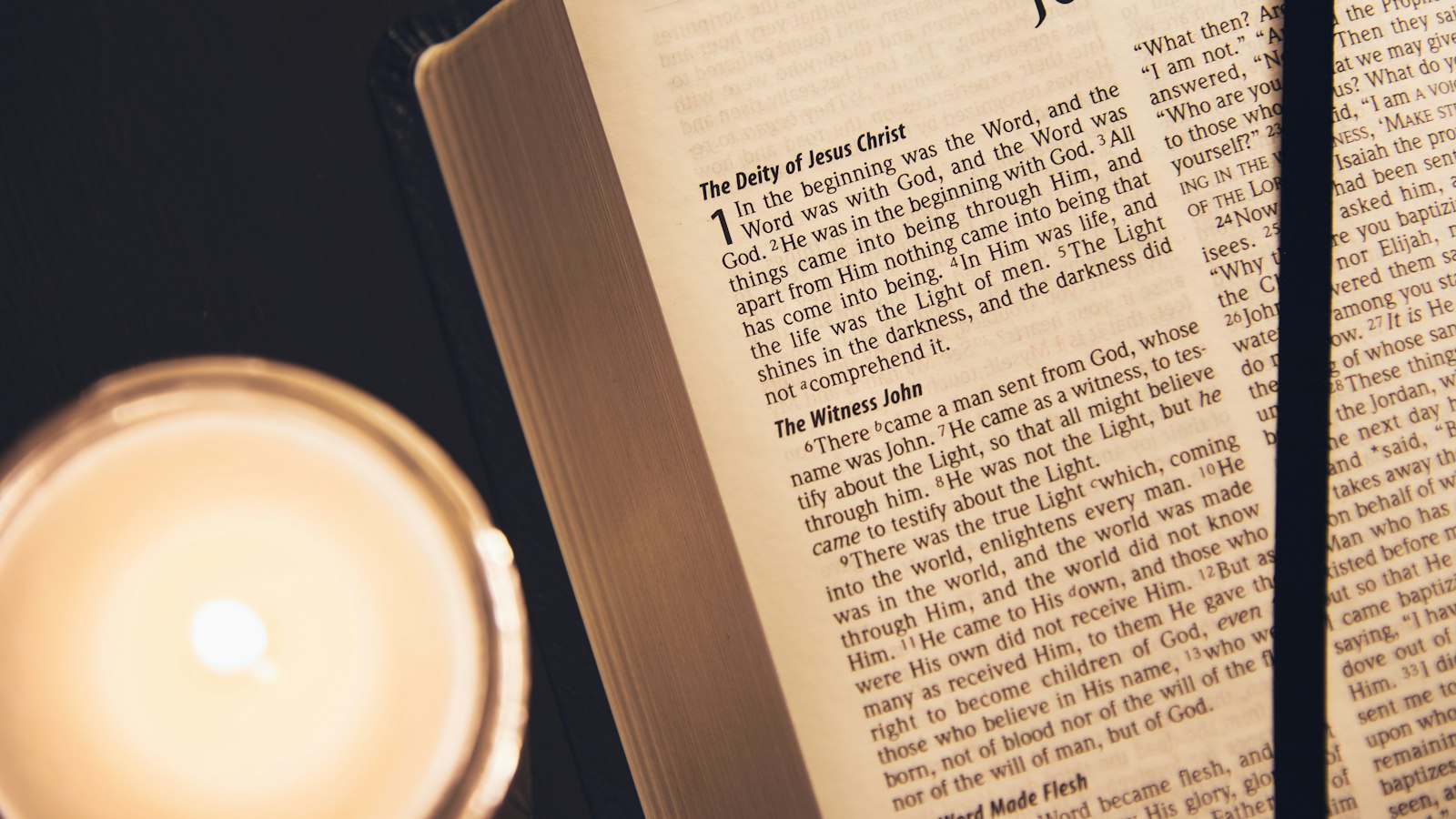
The Bible never mentions numerology by name, so the answer depends on which activity you mean. Scripture uses numbers symbolically throughout, from forty days in the wilderness to twelve tribes, and it clearly bans divination. Whether reducing a birth date to a life path number counts as divination is a question of conscience and tradition, not a plain verse.
Two things the text clearly does
First, the Bible uses numbers as symbols, constantly and without apology. Creation takes seven days. The flood rains for forty. Israel wanders the wilderness for forty years. There are twelve tribes and twelve apostles. Revelation hands the beast a number, six hundred sixty-six, and invites the reader to work out what it means. None of this is arithmetic used to predict anyone's future. It is structure, symbolism and mnemonic scaffolding, and it sits in the text like anything else the biblical writers cared to emphasize.
Second, the Bible bans divination, repeatedly and in strong terms. Deuteronomy 18 lumps consulters of spirits and practitioners of divination among practices Israel is told not to learn. Leviticus 19:26 says it in a single line: do not practice divination. Isaiah 47 mocks Babylon by asking its stargazers and monthly prognosticators to step forward and save the city, then answering that not one of them can. In Acts 16, Paul casts out a spirit of divination from a slave girl in Philippi. The prohibition is real, it is not one proof text, and any honest answer has to start there.
The question the verses do not answer
Here is the part people skip. The prohibition names categories like divination, sorcery and consulting the dead. It does not name anyone calculating a number from a birth date, because the modern practice of numerology, the life path number you get by adding up a birthday, is not what these authors were addressing. That system descends from Pythagorean streams and was popularized in the early twentieth century. When Deuteronomy forbids divination, it forbids a category, and the live question is whether today's numerology belongs inside that category or merely resembles it.
Different traditions land in different places, honestly and for reasons. A conservative evangelical reading tends to close the case at the category: seeking guidance about your life from anything other than prayer and scripture is the very thing being banned, whatever arithmetic you use to do it. The Catholic catechism rejects all forms of divination, including attempts to unveil the future, which most Catholic readers take to rule out predictive numerology while leaving symbolic number study untouched. Jewish tradition has its own long conversation. Gematria, the practice of reading Hebrew words through the numerical value of their letters, appears throughout rabbinic study as a way of drawing connections between texts, not as fortune-telling. Chai, the word for life, adds up to eighteen for exactly that kind of reflective reason.
Augustine, writing around the year 400, warned Christians away from anyone who claims numbers can reveal future events or human natures, which is roughly where every tradition still stands on prediction. Where they diverge is on everything short of prediction. Reading the forty and the twelve as literary and theological patterns is mainstream. So is using a number as a prompt for self-examination. Claiming the number tells you what will happen, who you should marry or which month you should sign the contract is the move most traditions say the verses actually forbid.
Symbolic numbers versus a calculated fate
The cleanest way to separate the two activities is to ask what the number is doing. In scripture, the number comments on the story. Forty does not predict the wilderness, it names its shape. Twelve does not cause the tribes, it frames the people. The number points back at the text and what the community already believes.
In divinatory numerology, the number points forward at you. It is asked to disclose a future, a compatibility verdict, a hidden nature, none of which you gave it beyond a birth date. That forward claim, that a reduction of digits carries information about the life attached to them, is the part controlled testing has never supported and most churches call divination. A number used as a mirror and a number used as a map are different activities that happen to share arithmetic, and almost every honest argument about whether numerology is biblical is really an argument about which one is on the table.
Working out days by hand is one thing; the fixed numbers in your own chart are another. Get your full numerology reportSee your complete number chart
Where 666 sits in all this
The number people fear is also the number the text frames most carefully. Revelation 13:18 says here is wisdom, let the reader calculate the number of the beast, and then immediately says the number is that of a man. Whatever the calculation was meant to expose, it is an identification, a puzzle with a referent, not a curse that activates when someone sees the digits on a receipt. Centuries of readers treating six six six as an evil omen to be avoided are practicing something Revelation never describes. The text's own logic, a number naming a power the audience was meant to recognize, is closer to gematria than to the fortune warnings sold around that number today.
Practicing either way without crossing your own line
If you hold the strict reading, the practical guidance is simple and does not require you to distrust anyone else. Skip any content, including this site's, that promises to tell you what will happen. Use the number pages for what they verifiably are, worked arithmetic and a structured prompt for reflection, or set them aside entirely.
If you hold the reflective reading, the same line still does the work. Ask what the number revealed and what you revealed. A personal year number that nudges you to take stock of your season is a journaling prompt wearing different clothes, and nothing in the verses bans honest stock-taking. The moment the number starts issuing verdicts about health, money or another person, both readings agree it has become the thing the text warns about.
This site publishes numerology as reflective practice for exactly that reason. The calculation is shown, the arithmetic is yours to check, and no page here claims to know your future. Whether that sits clean inside your faith is a question your tradition answers, not a verse quoted out of context by anyone, on either side.
Common questions
Does the Bible say numerology is a sin?
Not in those words. The Bible never mentions numerology, and it does clearly ban divination multiple times. Whether calculating a life path number counts as divination is the contested question, and Christian traditions answer it differently.
What does 666 actually mean in the Bible?
Revelation 13:18 presents it as a number to be calculated, the number of a man, an identification puzzle for its original audience. It is not described as a curse attached to the digits themselves, and seeing 666 on a price tag carries none of the meaning the book assigns it.
Are numbers symbolic in the Bible?
Yes, extensively. Seven frames creation, forty marks testing and transition, twelve structures the tribes and apostles. This symbolic use is a literary and theological device, and it is a different activity from using numbers to predict a future.
Can a Christian practice numerology?
Honest believers land on both sides. The strict reading says seeking any guidance from a calculated number is the divination the text forbids. The reflective reading says using the arithmetic as a prompt for self-examination, with no predictive claim, sits outside the ban. Neither reading permits claiming the number foretells events.
Is gematria the same as numerology?
They share the idea that letters carry numerical value, but gematria is a rabbinic study method that draws connections between texts and words. It is not the modern system that reduces a birth date to a life path, and it is not traditionally used as fortune-telling.
More on the method
- Angel number 222: what it means when it keeps showing up
- Angel number 444: the structure number, tripled
- Astrology reading vs horoscope app: what's actually different
- August 2026: the month that leaves every day its own energy
- Ben ming nian: surviving your own zodiac year
- Best day to launch a business, worked through
- Best day to sign a contract, by the numbers
- Best wedding dates for 2027, by the numbers
- Birthday number vs life path number
- Born on the 1st, 10th or 19th: the other 1 birthdays
- Born on the 28th of the month
- Business name numerology, without the superstition
- Can a psychic tell if your partner is cheating?
- Chinese New Year 2027: date, animal, element
- Chinese zodiac enemy signs and secret friends
- The five elements in Chinese astrology
- Your inner animal: Chinese zodiac signs by hour of birth
- Which Chinese zodiac signs should not marry
- The four trines: which zodiac animals are allies
- December 2026: the month that wants structure under the holidays
- Dreaming of numbers: what repeating digits in dreams mean
- Empath protection and energy cleansing: what a session actually involves
- Enemy numbers in numerology
- Fire Horse babies: the 1966 superstition and 2026
- Free psychic reading minutes: how the offers actually work
- Horse year check-in: Dragon to Goat
- Horse year check-in: Monkey to Pig
- Second half of the Horse year: Rat to Rabbit check-in
- How to calculate a universal day number
- How to choose a psychic reader
- How to tell if a psychic is real
- Important ages in numerology
- Is numerology real? The answer, in both directions
- Karmic debt numbers 13, 14, 16 and 19
- Friendly and enemy numbers for life paths 1, 5 and 9
- Life path 1 born in a Dragon year
- Life path 11 born in a Horse year
- Friendly and enemy numbers for life paths 2, 7 and 8
- Life path 2 born in a Dog year
- Life path 22 born in an Ox year
- Life path 28/1: the long way to a 1
- Friendly and enemy numbers for life paths 3, 4 and 5
- Life path 3 born in a Tiger year
- How rare is a 33 life path, really
- Life path 4 born in a Goat year
- Life path 5 born in a Horse year
- Life path 6 born in a Rabbit year
- Life path 7 born in a Snake year
- Life path 8 born in a Rat year
- Life path 9 born in a Pig year
- Live numerology reading: what it adds over a report
- The luckiest life path numbers, ranked honestly
- The three numbers your date of birth already gives you
- Which numbers can undo a master number
- Master numbers 11, 22 and 33
- Medium vs psychic: the actual difference
- November 2026: the month that won't stop talking
- How the numbers-and-animals system fits together
- Numerology reading vs psychic reading
- October 2026: the month every day needs a partner
- Past life reading: what actually happens
- Personal day number meanings
- Personal year 9 in 2026
- Your personal year number for 2027
- Pet medium reading: what actually happens in a session
- Can a psychic give you lucky numbers?
- A career reading when the money numbers say wait
- Psychic readings by chat, phone or video
- Seeing 28 everywhere: what it means
- September 2026: the month that steps every day forward
- Soulmate reading: psychic vs numerology
- Tarot reading vs psychic reading: which to book
- Universal year 2027: why the year is written 11/2
- What element is your Chinese zodiac sign
- Energy healing: what it is and what to expect
- What to ask a psychic in your first reading
- Will my ex come back? What a love reading can and cannot tell you
- Year of the Goat 2027: an early preview
- Try it on any date with the calculator