Astrology reading vs horoscope app: what's actually different
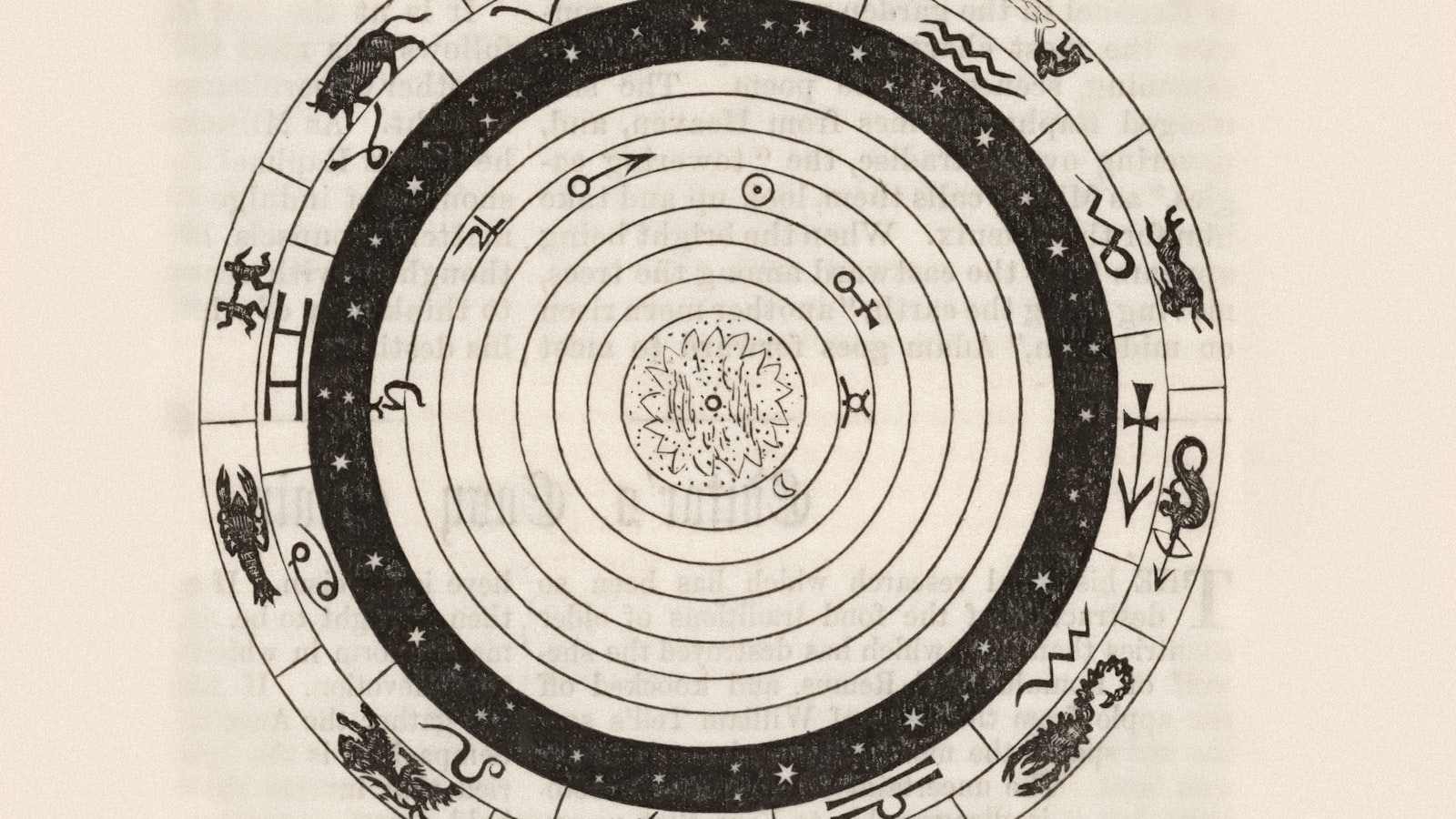
A horoscope app sorts you into one of twelve sun-sign forecasts written for millions of people at once. A live astrology reading uses your exact birth date, time and place to build your full natal chart, then a real astrologer discusses the specific transits affecting you and answers the question you actually came with.
Two different products that share one word
Most people who read a daily horoscope are reading something written for roughly one twelfth of the planet. A sun-sign horoscope needs exactly one fact about you, the position of the sun on the day you were born, and that single fact sorts every person alive into one of twelve buckets. The forecast for Scorpio that runs today was written for every Scorpio at once, from a newborn to someone turning ninety, in every country and every kind of week they happen to be having, whether their week is falling apart or going fine. For it to land for a meaningful share of that group, it has to stay general enough to fit almost anyone: "communication improves," "a financial decision needs a second look," lines vague enough that most readers can find something in them if they want to. That's just what the format is built for: a headline or a phone app, not something built around one specific person's actual day.
A live astrology reading is a different product wearing similar language. Instead of one data point, a real astrologer works from your exact birth date, time and place, which is enough to calculate where every planet sat in the sky at the moment you were born, not just the sun, plus how those placements sit relative to each other. That's the difference people miss when they use "horoscope" and "reading" like they're interchangeable, and they aren't. A horoscope app can send a hundred million Scorpios the same sentence today at no marginal cost. A reading is calculated once, for you, from data that belongs only to you, and it doesn't hold up for anyone else born on a different day, in a different city, at a different hour, even a sibling born a few years apart. Neither one is fake. They just answer different questions at different depths, and knowing which one you actually want before you book anything saves you from paying reading prices for app-level generality, or expecting an app to answer a question it was never built to handle.
What a full birth chart adds that the sun alone can't
Your sun sign describes one placement in a chart that has ten or more. The moon sign, calculated from the same birth data, is usually read as your emotional and instinctive side, and it changes signs roughly every two and a half days, so two people born a week apart under the identical sun sign can end up with completely different moons and, on a reading, a completely different conversation. The rising sign, sometimes called the ascendant, depends on the exact time and place of birth because it's tied to what was sitting on the eastern horizon at that specific moment, and it shifts into a new sign roughly every two hours across a single day. Skip the birth time and an astrologer genuinely cannot calculate it. Mercury, Venus and Mars add how you tend to think, what you're drawn to and how you act under pressure, and the twelve houses map all of those placements onto specific areas of life, from career and money to relationships and health, which is where a chart starts producing something that reads as personal rather than categorical.
This is why the intake for a real reading always starts with three specific questions: date of birth, time of birth down to the minute if you have it, and city of birth. None of that is small talk or a formality before the "real" part starts, it is the raw material the whole reading gets built from. A birth time that's off by even twenty minutes can shift the rising sign into a neighboring one and move a planet from one house into the next, which changes what the chart is read to mean for that area of your life. If you don't know your exact time, most readers can still work with a birth certificate estimate, a hospital record, or a noon default, but a reader worth paying will usually say upfront which parts of the reading get less precise as a result rather than presenting a guess as certainty. A horoscope app never asks any of this, because a sun-sign forecast was never built to use it in the first place, and adding your birth time to an app wouldn't change a word of what it shows you.
What actually happens when you talk to a real astrologer online
A live session usually opens with the reader confirming your birth details and pulling your chart up in real time, which is also the first moment you'll notice whether they're working from your specific data or leaning on lines general enough to fit anyone who called in. From there, a good reader talks about your current transits, meaning where the planets are moving right now relative to where they sat when you were born. A Saturn transit crossing your natal moon reads very differently from a Venus transit moving through your seventh house of partnerships, and which one is actually happening to you this month, and what it tends to correlate with, is information a horoscope app has no way to give you, because it was never calculating your personal chart to begin with, only the sun's position for the day. Some readers will also walk you through the timing, telling you roughly how many weeks a particular transit stays active, so you leave with a sense of when to expect a shift rather than a single flat statement about today.
The other real difference is that you get to ask something specific and get an answer aimed at that question, rather than a general mood forecast for the day handed to you regardless of what's actually going on. You can bring a real decision into the session, a job offer, a relationship that's stalled, a move you're weighing, and a reader working from your actual chart can point to what's active around that exact area of life right now and why. That back-and-forth is the part no app replicates: you ask a follow-up, the reader adjusts and goes deeper on the placement you asked about, and the conversation narrows toward your actual situation instead of staying at the level of "communication may be highlighted today" for everyone reading it. It's slower than opening an app and getting one line, and that slowness is largely the point of paying for it.
The fastest way to find out if a reader is actually working from your chart, instead of a script, is to test one yourself with a specific question. Get 5 minutes free with an astrology readerClaim your free astrology-reading minutes
The honest caveat about accuracy
None of this makes a live reading more scientifically verified than a horoscope app, and it's worth saying plainly rather than glossing over. Astrology as a whole hasn't held up under controlled testing, and nobody has demonstrated a mechanism by which a planet's position at your birth would shape your personality or your week. A birth chart is precise as a calculation, the math behind where a planet sat on a given date and time is exact and checkable by anyone with the right software, but the meaning attached to that placement is an interpretive tradition passed down and argued over for centuries, not a measured fact you can verify the way you'd check a birth certificate. A natal chart being more detailed than a sun-sign forecast doesn't make its conclusions more true, only more specific to the inputs it was built from, and it's worth keeping those two things separate in your own head before you put much weight on what a reader tells you.
It's also subjective from reader to reader, more than most people expect. Hand the same chart to two different astrologers and you'll often get two different emphases, sometimes two noticeably different stories, because reading a chart involves judgment calls about which placement matters most for a given question and how much weight to give a difficult aspect versus an easy one. That's not unique to astrology, plenty of interpretive fields work this way, a therapist and a doctor can both read the same set of symptoms and land on different priorities, but it means a reading is closer to a skilled, informed opinion than a diagnosis. The most useful way to treat a session is as a structured way to think through what's going on in your life right now, using your actual birth data as the starting material, rather than as a prediction you should plan your life around without applying your own judgment too.
How to test a reader before you commit to a full session
Because the value of a live reading depends heavily on the individual astrologer and not just the format, the smart move is to treat your first session as a trial rather than a full booking you commit to blind. Most live-reading platforms, Mysticsense among them, give new customers a few free minutes with a reader before anything is charged, and that's enough time to check two things: whether the reader actually asks for your birth date, time and place before saying anything specific, and whether what they tell you afterward sounds like it's coming from your chart or from a script general enough to work for whoever happened to call in that hour. Both of those are visible within the first couple of minutes if you're paying attention, well before you'd have to decide whether to pay for a longer session.
Use those first few minutes on purpose rather than letting them run out on pleasantries. Have your birth details ready before the call starts so you're not burning trial time reciting them, and lead with one specific question rather than a vague "what do you see for me," since a specific question is the fastest way to find out whether a reader engages with your actual chart or falls back on generalities that would fit anyone. If the answer feels tailored, references a placement you can look up afterward, and the reader is willing to explain which part of the chart they're reading from, that's a good sign worth booking a longer paid session over. If it feels like the same thing a horoscope app could have told you for free, you've lost a few minutes instead of a full session's cost finding that out.
Common questions
What's the difference between a horoscope app and a live astrology reading?
A horoscope app sorts you into one of twelve sun-sign categories and writes one general forecast for everyone in that group. A live astrology reading uses your exact birth date, time and place to build your full chart, and a real astrologer talks through what's specifically active in it for you right now.
Do I need to know my exact birth time for a real astrology reading?
It helps a lot. Your birth time determines your rising sign and which house each planet falls into, so a time that's off by even twenty minutes can change parts of the reading. Without it, a reader can usually still work from an estimate, but a good one will tell you which parts of the chart become less precise as a result.
What does a live astrologer actually do during a session?
They typically confirm your birth details, pull up your chart, and talk through your current transits, meaning where the planets are moving now compared to where they sat at your birth. You can also bring a specific question, a decision or a relationship, and the reader will point to what's active in your chart around that particular area of your life.
Is astrology, or a natal chart reading, actually accurate?
There's no scientific evidence for a mechanism connecting planetary positions to personality or events, and the interpretation of a chart is subjective enough that two astrologers can read the same chart differently. Treat a reading as an informed, structured way to think through your situation rather than a verified prediction.
How can I test an astrologer online before paying for a full reading?
Use the free trial minutes most live-reading platforms offer new customers. Have your birth date, time and place ready, ask one specific question instead of a vague one, and see whether the reader engages with your actual chart or falls back on lines general enough to fit anyone.
More on the method
- August 2026: the month that leaves every day its own energy
- Ben ming nian: surviving your own zodiac year
- Best day to launch a business, worked through
- Best day to sign a contract, by the numbers
- Best wedding dates for 2027, by the numbers
- Birthday number vs life path number
- Born on the 1st, 10th or 19th: the other 1 birthdays
- Born on the 28th of the month
- Business name numerology, without the superstition
- Can a psychic tell if your partner is cheating?
- Chinese New Year 2027: date, animal, element
- Chinese zodiac enemy signs and secret friends
- The five elements in Chinese astrology
- Your inner animal: Chinese zodiac signs by hour of birth
- Which Chinese zodiac signs should not marry
- The four trines: which zodiac animals are allies
- December 2026: the month that wants structure under the holidays
- Dreaming of numbers: what repeating digits in dreams mean
- Empath protection and energy cleansing: what a session actually involves
- Enemy numbers in numerology
- Fire Horse babies: the 1966 superstition and 2026
- Free psychic reading minutes: how the offers actually work
- Horse year check-in: Dragon to Goat
- Horse year check-in: Monkey to Pig
- Second half of the Horse year: Rat to Rabbit check-in
- How to calculate a universal day number
- How to choose a psychic reader
- How to tell if a psychic is real
- Important ages in numerology
- Karmic debt numbers 13, 14, 16 and 19
- Friendly and enemy numbers for life paths 1, 5 and 9
- Life path 1 born in a Dragon year
- Life path 11 born in a Horse year
- Friendly and enemy numbers for life paths 2, 7 and 8
- Life path 2 born in a Dog year
- Life path 22 born in an Ox year
- Life path 28/1: the long way to a 1
- Friendly and enemy numbers for life paths 3, 4 and 5
- Life path 3 born in a Tiger year
- How rare is a 33 life path, really
- Life path 4 born in a Goat year
- Life path 5 born in a Horse year
- Life path 6 born in a Rabbit year
- Life path 7 born in a Snake year
- Life path 8 born in a Rat year
- Life path 9 born in a Pig year
- Live numerology reading: what it adds over a report
- The luckiest life path numbers, ranked honestly
- Which numbers can undo a master number
- Master numbers 11, 22 and 33
- Medium vs psychic: the actual difference
- November 2026: the month that won't stop talking
- How the numbers-and-animals system fits together
- Numerology reading vs psychic reading
- October 2026: the month every day needs a partner
- Past life reading: what actually happens
- Personal day number meanings
- Your personal year number for 2027
- Pet medium reading: what actually happens in a session
- Can a psychic give you lucky numbers?
- A career reading when the money numbers say wait
- Psychic readings by chat, phone or video
- Seeing 28 everywhere: what it means
- September 2026: the month that steps every day forward
- Soulmate reading: psychic vs numerology
- Tarot reading vs psychic reading: which to book
- What element is your Chinese zodiac sign
- Energy healing: what it is and what to expect
- What to ask a psychic in your first reading
- Will my ex come back? What a love reading can and cannot tell you
- Year of the Goat 2027: an early preview
- Try it on any date with the calculator