Tarot reading vs psychic reading: which to book
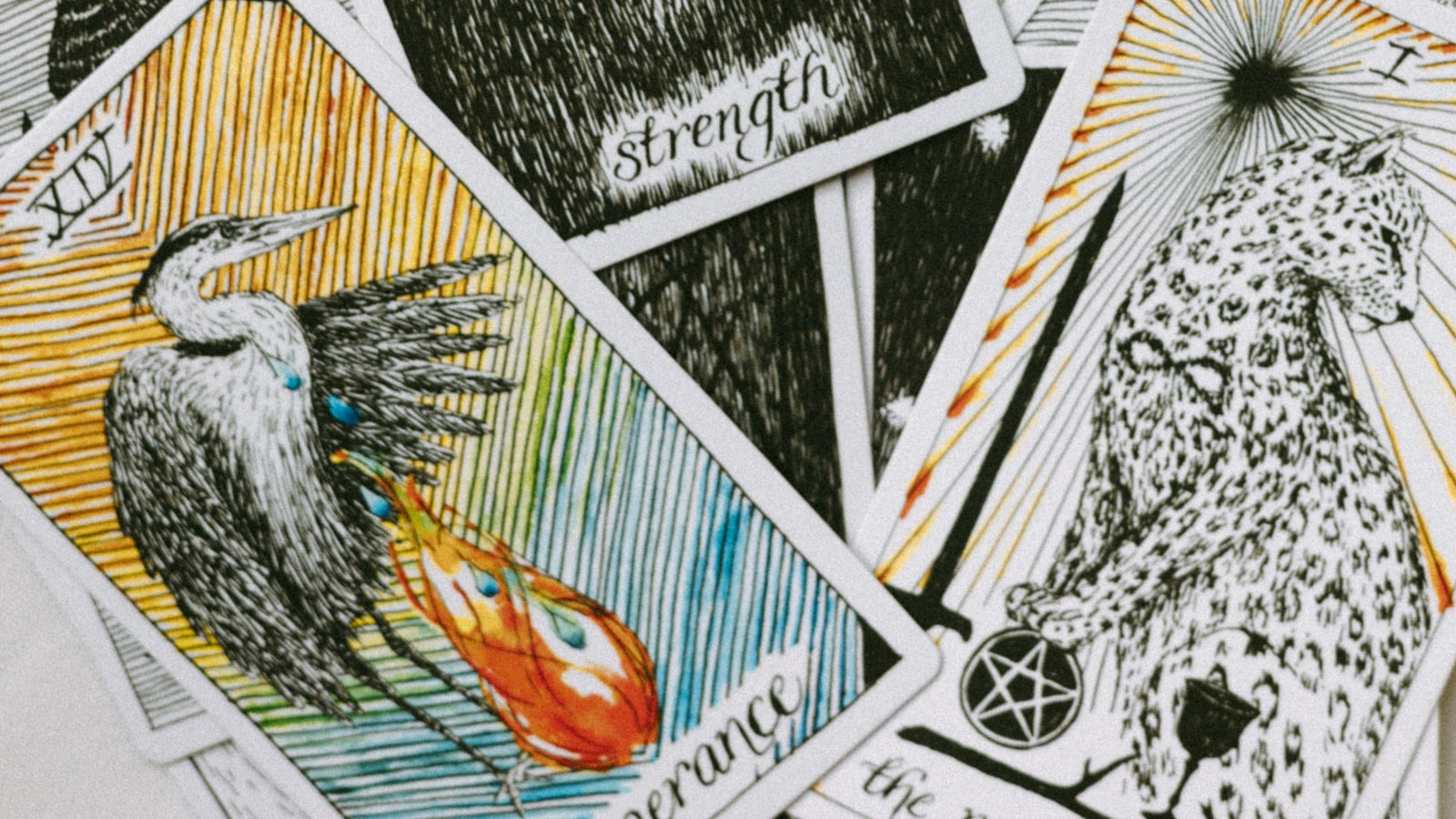
A tarot reading uses a deck of cards as a structured prompt, so you can watch the reasoning happen: which cards, which position, what they mean together. A general psychic reading has no such prop, just the reader's impressions. Tarot tends to suit questions about paths and choices; a psychic reading suits questions that don't have neat options yet.
One uses a tool, one doesn't
Tarot and psychic reading get sold as if they are the same product with a different name on the box, but the mechanics differ in a way that matters. A tarot reading runs through a deck: the reader shuffles, you or they draw a set number of cards into a spread, and the reading is built from what landed where. There is a structure sitting between you and the reader's raw impression, and you can watch it get built in front of you. Even someone who has never had a reading before can follow along card by card, because the structure is visible rather than happening entirely inside the reader's head.
A general psychic reading, sometimes called a clairvoyant or intuitive reading, skips the prop. There is no deck, no chart, no visible method, just the reader describing what they are picking up. That is not a knock on it; plenty of readers work this way by choice. It does mean you are relying on the person alone, with nothing external to check the reasoning against. Some readers who are strong intuitively find cards get in their way, slowing down an impression that would otherwise come through directly, so the absence of a prop isn't automatically a weaker approach, just a different one.
What a tarot session looks like
You will usually be asked for a focus rather than a fully worded question, something like your current relationship or a job situation, and the reader draws a spread built for that shape of question: three cards for past, present and future, or something layered like a Celtic cross for a bigger decision. Then they talk you through the cards in order, and a lot of readers will explain why a card sits where it does, which gives you something to weigh if it doesn't fit. A three-card pull for a quick question can be done inside a five-minute trial; a full ten-card spread for something like a career decision usually needs the length of a paid session to do properly.
Because the cards are visible, tarot has a built-in transparency that a straight psychic reading doesn't. Two different readers can draw a similar spread and you can compare their interpretations, or you can look up a card's traditional meaning yourself afterward and see how much the reader added versus recited. That doesn't make it more accurate, but it does make it easier to evaluate. It also means a reader who is just reciting textbook meanings without connecting them to your situation is easier to spot, since the gap between a generic definition and a genuinely tailored reading becomes obvious once you compare the two.
What a general psychic reading looks like instead
A psychic session usually opens with your question stated plainly, and the reader responds in real time with no deck to lean on, just what they say they are sensing about you, the other person, or the situation. The conversation moves more like a normal exchange and less like a walkthrough, because there's no spread dictating the order of topics. That can make the session feel more personal, since it follows your question rather than a card's fixed position, but it also means a weaker reader has nowhere to hide behind structure the way a tarot reading offers one.
The tradeoff is that there is nothing external for you to check afterward. With tarot you can at least ask why a card was read a certain way. With a straight psychic reading, the entire session is the reader's word, which puts more weight on choosing someone with a track record of reviews rather than judging the method itself. That's the main reason experienced callers tend to lean harder on ratings and repeat-customer numbers when booking a general reading than when booking tarot, where the cards themselves offer a kind of second opinion.
If a card-based session sounds like the better fit for your question, a short trial with a tarot reader is the easiest way to find out. Get 5 minutes free with a tarot readerClaim your free tarot minutes
Which one fits your question
Tarot tends to earn its keep on questions with something like options attached: stay or go, this job or that one, push forward with a plan or wait on it. The spread naturally breaks a decision into pieces, so it's a decent fit when you already sense the shape of the choice and want another angle on it. A spread built around two paths, for instance, will typically dedicate cards to what each path looks like separately, which is a genuinely useful way to see a decision laid out rather than just talked about.
A general psychic reading tends to fit better when the situation doesn't have tidy options yet, when what you want is a read on a person, a feeling or a pattern rather than a fork in the road. If your question is closer to "what's going on with him" than "should I do A or B," you're not giving tarot's structure much to work with. Forcing an open-ended question into a spread anyway sometimes produces a strained reading, where the reader has to work around cards that don't map cleanly onto a question that never had clear options in the first place.
How to try either without overcommitting
Plenty of readers do both, and a lot of psychic platforms let you filter for tarot specialists if that's what you're after, so you're not stuck guessing which a given reader favours. If you're not sure which suits your question, it's fine to say so at the start of a session; most readers will tell you honestly whether tarot or a straight reading fits better. A reader who hears your question and immediately suggests dropping the cards, or picking them back up, is generally a good sign, since it means they're adapting to you rather than running the same format regardless of what you asked.
Either way, the sensible approach with a new reader is a short session rather than committing to a long paid one up front. Keep the question specific, watch whether the interpretation tracks with the cards or the impressions being described, and treat the result as one more thing to weigh rather than an instruction to follow, especially on anything to do with money. However clean the spread looks, it's still one reader's interpretation of it, and two tarot readers can draw the same three cards and tell noticeably different stories.
Common questions
What's the actual difference between tarot and a psychic reading?
Tarot uses a deck of cards as a structured prompt, so the reading is built from specific cards in specific positions that you can see and question. A general psychic reading has no prop like that; it's just the reader describing impressions, with nothing external to check the reasoning against.
Is tarot considered a form of psychic reading?
Most platforms and readers treat it as one branch of psychic work rather than something separate, since interpreting the cards still leans on the reader's intuition rather than a fixed rulebook. Plenty of readers who do tarot also offer general readings without the cards.
Is tarot more accurate than a straight psychic reading?
Not inherently. The cards give you a visible structure to evaluate against, which makes a weak interpretation easier to spot, but accuracy still comes down to the individual reader rather than the method they're using.
Can I ask a psychic to use tarot even if I didn't book a tarot specialist?
Many readers can pull cards on request even if tarot isn't their listed specialty, but a reader who does it daily will generally give you a tighter, more confident spread. If tarot specifically is what you want, it's worth booking someone who lists it as their focus.
Do I need to know how to read tarot myself to get value from a reading?
No. The reader does the interpreting, so you don't need to know a single card's meaning going in. Knowing the basics can help you follow along and ask better questions, but it isn't required.
More on the method
- Angel number 222: what it means when it keeps showing up
- Angel numbers chart: the meanings, the math, and the honest take
- Angel number 444: the structure number, tripled
- Astrology reading vs horoscope app: what's actually different
- August 2026: the month that leaves every day its own energy
- Ben ming nian: surviving your own zodiac year
- Best day to launch a business, worked through
- Best day to sign a contract, by the numbers
- Best wedding dates for 2027, by the numbers
- Birthday number vs life path number
- Born on the 1st, 10th or 19th: the other 1 birthdays
- Born on the 28th of the month
- Business name numerology, without the superstition
- Can a psychic tell if your partner is cheating?
- Chinese New Year 2027: date, animal, element
- Chinese zodiac enemy signs and secret friends
- The five elements in Chinese astrology
- Your inner animal: Chinese zodiac signs by hour of birth
- Which Chinese zodiac signs should not marry
- The four trines: which zodiac animals are allies
- December 2026: the month that wants structure under the holidays
- Dreaming of numbers: what repeating digits in dreams mean
- Empath protection and energy cleansing: what a session actually involves
- Enemy numbers in numerology
- Fire Horse babies: the 1966 superstition and 2026
- Free psychic reading minutes: how the offers actually work
- Horse year check-in: Dragon to Goat
- Horse year check-in: Monkey to Pig
- Second half of the Horse year: Rat to Rabbit check-in
- How to calculate a universal day number
- How to choose a psychic reader
- How to tell if a psychic is real
- Important ages in numerology
- Is numerology biblical? The honest reading of the verses
- Is numerology real? The answer, in both directions
- Karmic debt numbers 13, 14, 16 and 19
- Friendly and enemy numbers for life paths 1, 5 and 9
- Life path 1 born in a Dragon year
- Life path 11 born in a Horse year
- Friendly and enemy numbers for life paths 2, 7 and 8
- Life path 2 born in a Dog year
- Life path 22 born in an Ox year
- Life path 28/1: the long way to a 1
- Friendly and enemy numbers for life paths 3, 4 and 5
- Life path 3 born in a Tiger year
- How rare is a 33 life path, really
- Life path 4 born in a Goat year
- Life path 5 born in a Horse year
- Life path 6 born in a Rabbit year
- Life path 7 born in a Snake year
- Life path 8 born in a Rat year
- Life path 9 born in a Pig year
- Live numerology reading: what it adds over a report
- The luckiest life path numbers, ranked honestly
- The three numbers your date of birth already gives you
- Which numbers can undo a master number
- Master numbers 11, 22 and 33
- Medium vs psychic: the actual difference
- November 2026: the month that won't stop talking
- How the numbers-and-animals system fits together
- Numerology reading vs psychic reading
- October 2026: the month every day needs a partner
- Past life reading: what actually happens
- Personal day number meanings
- Personal year 9 in 2026
- Your personal year number for 2027
- Pet medium reading: what actually happens in a session
- Can a psychic give you lucky numbers?
- A career reading when the money numbers say wait
- Psychic readings by chat, phone or video
- Seeing 28 everywhere: what it means
- September 2026: the month that steps every day forward
- Soulmate reading: psychic vs numerology
- Universal month number: the arithmetic, month by month
- Universal year 2027: why the year is written 11/2
- What element is your Chinese zodiac sign
- Energy healing: what it is and what to expect
- What to ask a psychic in your first reading
- Will my ex come back? What a love reading can and cannot tell you
- Year of the Goat 2027: an early preview
- Try it on any date with the calculator