Best day to sign a contract, by the numbers
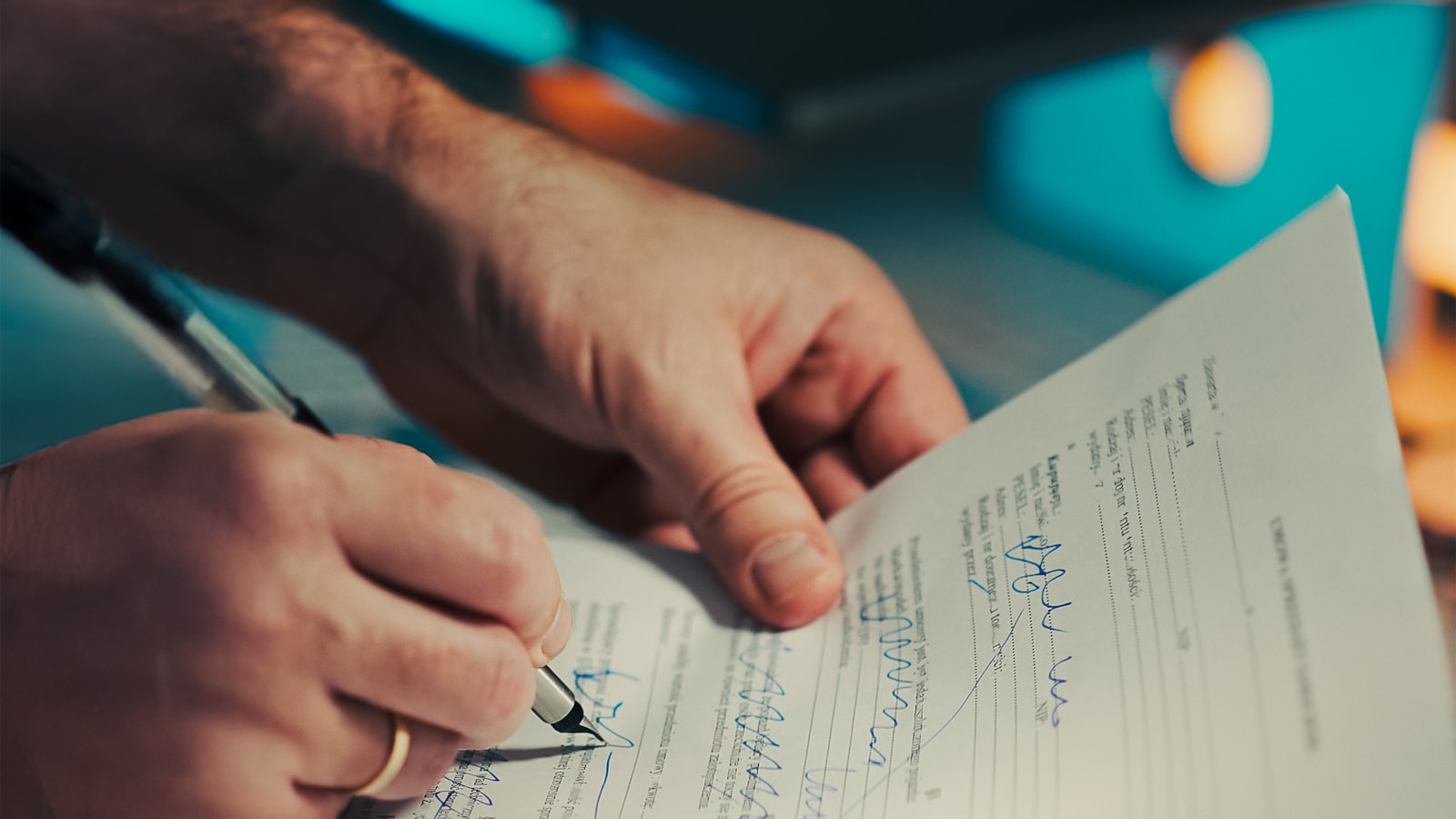
The strongest days to sign a contract are universal day numbers 8, 4 and 22: money, foundations and large-scale building respectively. The weakest are 9, which favors endings over commitments, 7, which favors second-guessing, and 5, which favors change. Check the date's universal day number before you sign, but let the actual terms decide, not the arithmetic.
The numbers that favor a contract
An 8 day is the most direct fit. Numerology assigns 8 to money, authority and material results, which is exactly the register a contract operates in, so an 8 day is read as favoring terms that hold and deals that pay off as structured. A 4 day is the quieter choice: 4 is the number of foundations and follow-through, better suited to an agreement you want to be boring in the best sense, still standing and unremarkable in five years.
A 22 day is the strongest of all, when you can get one. It is 4's foundation-building read at a larger scale, the master number associated with structures meant to outlast the people who built them, which makes it the number most numerologists would point to for a lease, a merger, or anything with real weight behind it. A 2 day is worth a mention too, not for scale but for tone: 2 favors cooperative, evenly balanced terms, which suits a contract where both sides are meant to come out ahead rather than one side extracting the maximum from the other.
The numbers to avoid, and why
A 9 day reads wrong for a beginning of any kind. Nine is the number of endings and release, the energy of closing a chapter rather than opening one, so signing new terms on a 9 day is read as starting something under the sign of its own conclusion. It is not a curse, but it is a mismatch, and there are usually better days within the same week.
A 7 day is subtler trouble. Seven favors analysis, doubt and discovering the one clause you missed, which is a fine instinct to have before you sign and an unwelcome one to have after. A 5 day carries the clearest caution: 5 is change, restlessness and disrupted plans, the opposite of what you want underwriting an agreement you are hoping will hold its shape. None of these three numbers makes a contract fail. They simply pull against what a contract is for.
How to check your date
The universal day number comes from adding every digit in the date and reducing the total to one digit, stopping early if you land exactly on 11, 22, 28 or 33. Write the date as day, month and year, add every digit, and keep adding the digits of the result until one digit is left. For 26 August 2026, that is 2+6+0+8+2+0+2+6, which comes to 26, and 26 reduces to 8.
It is worth going one layer deeper if the date matters to you specifically, since the universal day number is shared by everyone and a personal day number is not. That figure folds your own birth month and day into the same date, and it can land somewhere quite different from the universal number showing on the calendar. When the two agree, the read is stronger. When they disagree, trust the personal number for your own decision and treat the universal number as the general backdrop. If you are signing alongside a business partner, run their personal day number for the same date too, since a contract that reads well for you and poorly for them is not a good day for the agreement as a whole.
Working out days by hand is one thing; the fixed numbers in your own chart are another. Get your full numerology reportSee your complete number chart
A worked example
Take two dates from August 2026. The 22nd is a 22 day outright, day and universal number both landing on the master figure, about as strong a signing date as the calendar offers this year, worth saving for the contract that matters most. The 26th works out to a clean 8, as shown above, a solid and unremarkable choice for an ordinary agreement that just needs to hold.
Now the dates to sidestep. The 18th reduces to a 9, closing energy rather than opening energy, a poor match for new terms even though nothing about the date itself is unlucky. The 14th reduces to a 5, change and disruption, worth avoiding if the whole point of the contract is stability. None of this means a deal signed on the 18th is doomed. It means that if you have a choice of dates in the same week, the 22nd or the 26th is the better pick over the 14th or the 18th.
What numerology can't do for a contract
A favorable date does not make a bad contract good. It will not catch an unfair clause, a missing termination right, or a counterparty who never intended to hold up their end. Read every contract as carefully on an 8 day as you would on a 9 day, because the number changes the tone of the day, not the content of the document in front of you.
Used honestly, this is a tie-breaker, not a decision-maker. If a deal is ready and the terms are sound, picking the better-numbered day among the ones actually available to you costs nothing and might genuinely help you feel more settled about the timing. If a deal is not ready, no date fixes that, and no numerology page should tell you otherwise. The number can tell you how a day tends to feel. It has no opinion on whether the other side is negotiating in good faith, and that is the question worth your attention.
Common questions
What is the best universal day number to sign a contract?
22 is the strongest, since it carries 4's foundation-building energy at master-number scale, followed closely by a plain 8 for money and authority, and 4 itself for a steady, unremarkable agreement. A 2 day is a reasonable secondary choice when the contract is specifically a partnership between two roughly equal sides.
Is a 22 day better than an 8 day for signing a contract?
For anything with significant weight or long-term stakes, yes, since 22 is read as the same foundation-building instinct as 4 and 8 combined at a larger scale. For an ordinary contract, the difference matters less, and an 8 day is common enough that it is usually not worth waiting for a rarer 22.
Which numerology numbers should I avoid for signing a contract?
9, 7 and 5 are the ones worth avoiding when you have a choice. 9 favors endings over beginnings, 7 favors doubt and discovering problems after the fact, and 5 favors change and disruption, which works against an agreement you want to hold its shape. None of the three makes a contract fail on its own.
How do I find the universal day number for a specific date?
Write the date as day, month and year, add every individual digit together, then keep adding the digits of the result until one digit remains, stopping early if a stage lands exactly on 11, 22, 28 or 33. For example, 26 August 2026 sums to 26, which reduces to 8.
Does numerology actually affect whether a contract works out?
There is no evidence that a date changes contract outcomes, and this site does not claim otherwise. What a favorable date can reasonably offer is a small psychological boost and a tie-breaker when several signing dates are equally available. It is not a substitute for reading the terms or checking the other side's track record.
More on the method
- How to calculate a universal day number
- Personal day number meanings
- Master numbers 11, 22 and 33
- August 2026: the month that leaves every day its own energy
- September 2026: the month that steps every day forward
- Enemy numbers in numerology
- Chinese zodiac enemy signs and secret friends
- Numerology reading vs psychic reading
- Born on the 28th of the month
- Friendly and enemy numbers for life paths 1, 5 and 9
- Friendly and enemy numbers for life paths 3, 4 and 5
- What to ask a psychic in your first reading
- The four trines: which zodiac animals are allies
- Friendly and enemy numbers for life paths 2, 7 and 8
- Which numbers can undo a master number
- Tarot reading vs psychic reading: which to book
- Life path 7 born in a Snake year
- October 2026: the month every day needs a partner
- Life path 8 born in a Rat year
- Medium vs psychic: the actual difference
- Seeing 28 everywhere: what it means
- Which Chinese zodiac signs should not marry
- Life path 1 born in a Dragon year
- How to tell if a psychic is real
- The luckiest life path numbers, ranked honestly
- Try it on any date with the calculator